
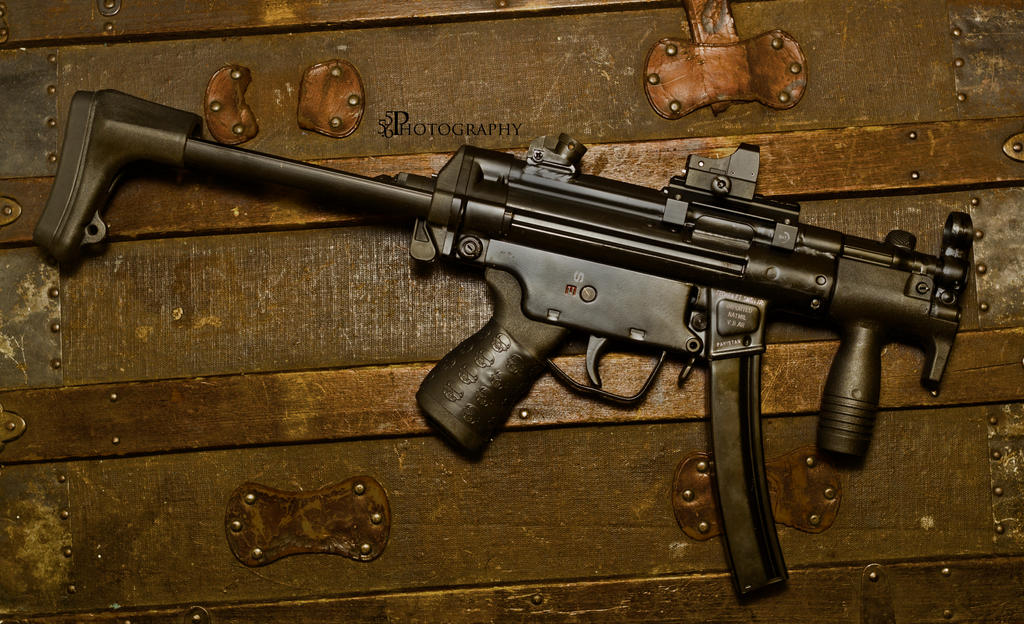
The Case for the Modern PDW (Why the Pistol-Caliber Carbine Deserves Another Look)
For years, pistol-caliber carbines have been dismissed as range toys.
“They’re just expensive pistols.”
“They’re obsolete because of .300 Blackout.”
“Just buy a short AR.”
That take misses the point. The purpose of a PDW isn’t to replace a rifle, it’s to solve a different problem.
Civilians should optimize for civilian problems, not infantry problems. Most of us aren’t clearing buildings overseas or running patrols. We drive to work, travel, stay in hotels, hike, commute, and move through everyday life. A firearm that quietly fits into that reality has advantages that never show up on a ballistic gel chart.
Think of the PCC/PDW as bridging the gap between a handgun and a rifle: better control, capacity, and accuracy than a pistol, without the bulk, recoil, or logistics of a full rifle. It’s a “bag gun” — discreet, lightweight, and capable enough to throw in a backpack, vehicle console, or range bag without turning heads or weighing you down.
Mission Dictates Equipment
Every firearm is a compromise.
– A 20-inch AR is phenomenal at maximizing velocity and effective range.
– A 14.5-inch rifle is a fantastic general-purpose carbine.
– An 11.5-inch or 10.3-inch SBR sacrifices some velocity for maneuverability.
– A .300 Blackout gun like the SIG Rattler sacrifices even more to become incredibly compact.
The PDW simply continues that progression — another compromise, but one optimized around portability, discretion, and practical everyday use.
Weight Matters
Everyone talks about terminal ballistics. Almost nobody talks about what they’re actually carrying.
Approximate unloaded weights:
– MP5K PDW: ~4.4 lbs
– SIG MPX K: ~4.5 lbs
– B&T APC9K Pro: ~5.3–5.5 lbs
– SIG Rattler LT (.300 BLK): ~5.1–5.8 lbs
– Mk18 (10.3″ 5.56): ~5.9–6.1 lbs
Now add a loaded magazine, suppressor, weapon light, optic, and sling. That half-pound-to-pound difference becomes very noticeable when you’re carrying a firearm for hours, moving in and out of vehicles, or hauling it in a backpack all day.
## A Few Inches Matter More Than People Admit
People love to say, “it’s only three or four inches.” Until they’re trying to fit the gun into a normal backpack.
An MP5K or APC9K with a folded or collapsed stock (roughly 13–14 inches) fits into bags that simply won’t accommodate a Mk18 or many .300 Blackout platforms without moving into noticeably larger packs. Those few inches determine what backpack you can use, how discreetly you can carry, whether it fits under a vehicle seat, and whether it reads as luggage or obviously contains a firearm.
The mission isn’t winning internet arguments. The mission is actually having the firearm with you.
The “Actually Carry It” Principle
The internet obsesses over terminal ballistics. None of that matters if the firearm stays home because it’s inconvenient.
A rifle locked in the safe has zero capability. A compact PDW that’s actually with you while traveling, camping, working around rural property, or stored discreetly in a vehicle (where lawful) has infinitely more utility than the “better” rifle you decided not to bring.
This is about practicality.
Ammunition Commonality and Terminal Performance
If your handgun is chambered in 9mm, your PDW can massively simplify logistics: one caliber, one training ammo supply, one defensive ammo supply, and potentially shared magazines depending on the platform. Less complexity is almost always a good thing.
You can also run the same defensive hollow-point loads as your carry pistol and those loads generally perform better out of a longer PDW barrel, with improved velocity and expansion compared to a handgun. For suppressed use, 9mm is naturally quiet, which is another point in its favor.
Training Costs
Skill comes from repetitions. 9mm remains substantially cheaper than .300 Blackout and generally less expensive than quality 5.56. That means more rounds fired, more training, more confidence, and better weapon handling.
The shooter who trains regularly with a PDW is probably better prepared than the shooter who rarely fires their premium rifle because ammo costs have become prohibitive.
Shootability (eh, I hate this word.)
The PDW isn’t trying to outperform a rifle; it’s replacing the handgun whenever circumstances allow. Compared to a pistol, a PDW offers:
– Four points of contact
– A red dot mounted naturally at eye level
– Significantly greater stability
– Faster follow-up shots
– Better recoil control and practical accuracy
– Easier hits at 50–100 yards
That matters far more than most internet debates acknowledge.
Modern Trigger Technology
The game changer? Forced-reset triggers (FRTs) use the bolt’s cycling to mechanically reset the trigger faster than a manual release, enabling rapid but legal follow-up shots, one distinct pull per round. A 9mm PDW already has minimal recoil; pair that with a controllable firing cadence and the platform becomes exceptionally easy to shoot quickly and accurately. That doesn’t make 9mm equal to 5.56, it simply increases the practical effectiveness of the platform within its intended role.
Why Not Just Carry a Rifle?
Sometimes the rifle is simply the wrong tool. Consider:
– Traveling and hotels
– Vehicle use and commuting
– Hiking
– Executive protection or plainclothes work
– Emergency “bag gun” scenarios
– Any situation where discretion matters
-Any where you consider a high threat area and CCW doesn’t cut it.
Openly carrying a rifle immediately changes how people perceive you. Whether that’s fair or not is beside the point, a visible long gun attracts attention, shapes interactions, and can create social friction before anything has happened. A more discreet firearm changes those dynamics because it stays unseen unless there’s a lawful reason to deploy it. That’s not an argument against rifles. It’s an argument for choosing the right tool for the environment.
Yes, I know, Rifle Ballistics Win
Nobody serious disputes this. 5.56 and .300 Blackout deliver superior terminal performance. If your mission is defending a fixed position, engaging at extended distance, or maximizing ballistic performance, grab the rifle.
But that’s not the question most civilians are actually answering day to day. The real question is: what firearm are you actually willing and able to have with you? That’s where the PDW earns its place.
Trade-offs
No tool is perfect. PCCs trade some long-range power and barrier penetration for portability and shootability. But for most civilian defensive or “just in case” needs — inside 100 to 150 yards — they deliver excellent performance with far fewer drawbacks than lugging a rifle everywhere.
Getting Started
If you’re building or choosing one, look at platforms like the B&T APC9/SPC9, SIG MPX variants, or a quality 9mm AR build. Prioritize reliability, ergonomics, and suppressor readiness — and pair whatever you choose with quality training.
Final Thoughts
The modern PDW isn’t replacing the AR-15. It’s complementing it. Too many people compare it against a rifle when they should be comparing it against a handgun.
For the average civilian, the PDW offers:
– Greater shootability than a pistol
– Less weight than many rifle-caliber options
– Smaller overall dimensions
– Lower training costs
– Shared ammunition with a sidearm
– Practical concealability inside everyday bags
– A firearm you’re far more likely to actually have with you
Mission dictates equipment. For many civilians, the goal isn’t carrying the most powerful rifle possible, it’s carrying the most capable firearm that realistically integrates into everyday life. That’s where the modern PDW shines.