
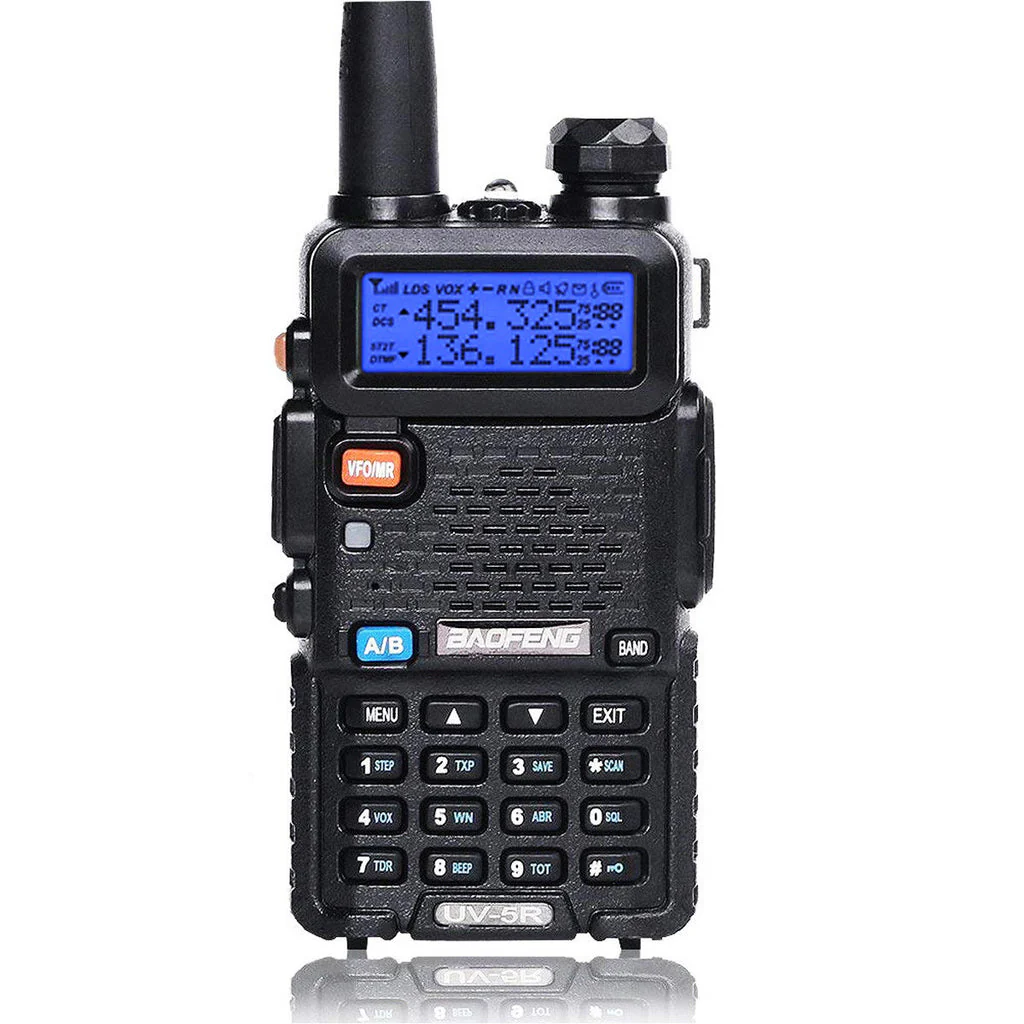
The Baofeng UV-5R is one of the easiest ways to get a group started with radios without breaking the bank. At around $25-30 a unit, you can outfit an entire family or small group for less than the cost of a single higher-end radio, which matters if you’re trying to get everyone on the same page rather than just yourself. It’s not complicated to operate: program a few channels, teach people to push the button and talk, and most folks pick it up in a few minutes. That said, it’s not indestructible. The plastic housing cracks if you drop it on concrete enough times, and it’s not waterproof, so a dunk in a creek or a hard rain without a cover will likely kill it. Think of it as a starter radio, not a lifetime radio. It’s a solid way to learn the basics of programming, frequencies, and communication discipline before deciding if you want to invest in something more rugged down the line.
Support Tri Star Defense by using our affiliate link: https://amzn.to/4w9LlVP
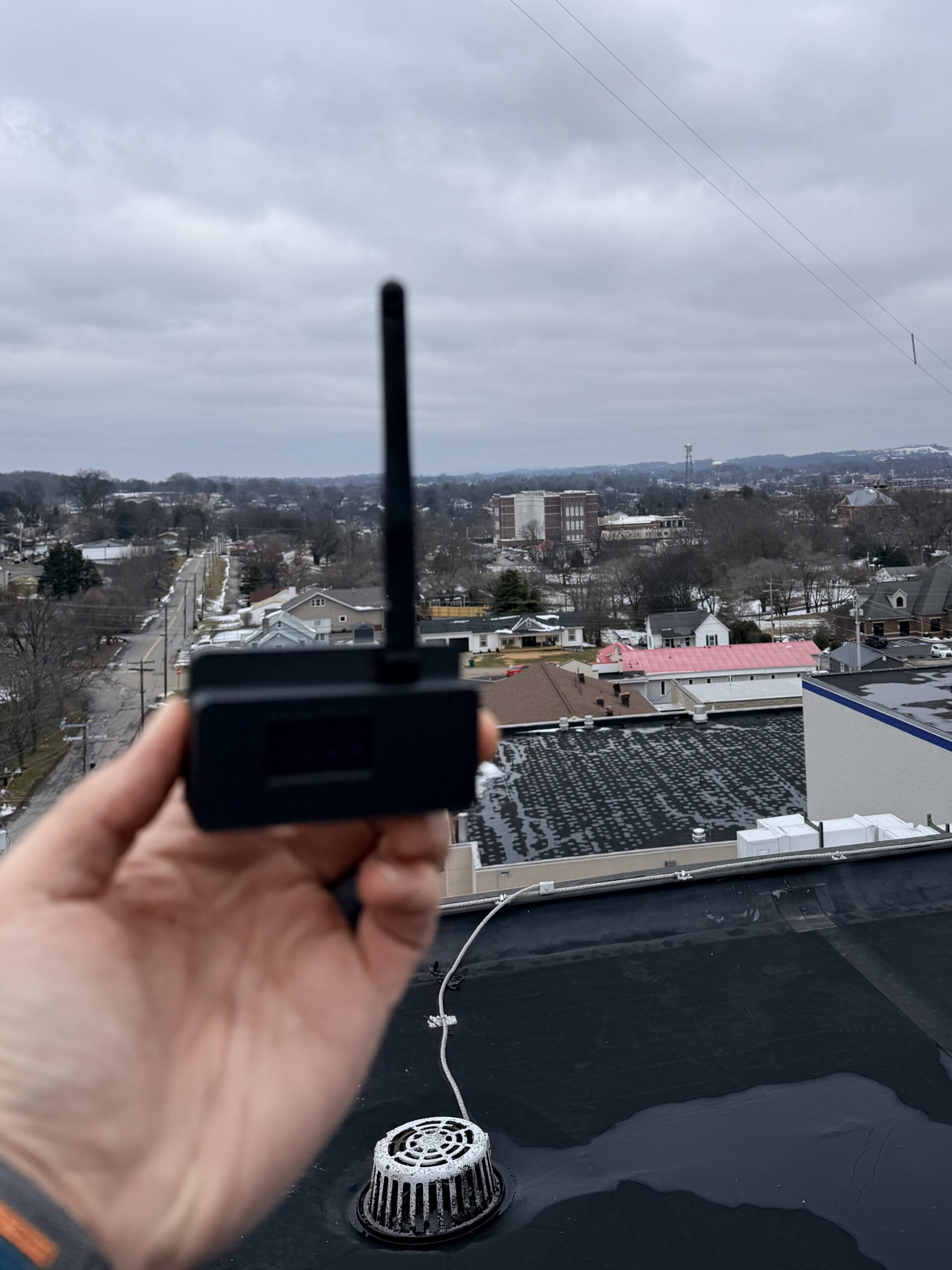
We’ve recently started using Meshcore, a low-cost radio system that can connect to your phone or work on its own. While each radio has limited range, a growing network of user-built repeater nodes across the United States helps extend coverage making it possible to reach people hundreds of miles away without relying on traditional infrastructure.
Here is a link to a great resource: https://youtu.be/s0OLSexb5s0?si=MmX23dugMs0c8PBI
Affiliate Link for Meshcore to link to your phone: https://amzn.to/4aVNnQX
Affiliate Link for standalone Meshcore devices: https://amzn.to/4wcLwQk
Affiliate Link for repeater (only purchase if you have access to high areas such as roofs, mountain tops): https://amzn.to/4ytVrCA
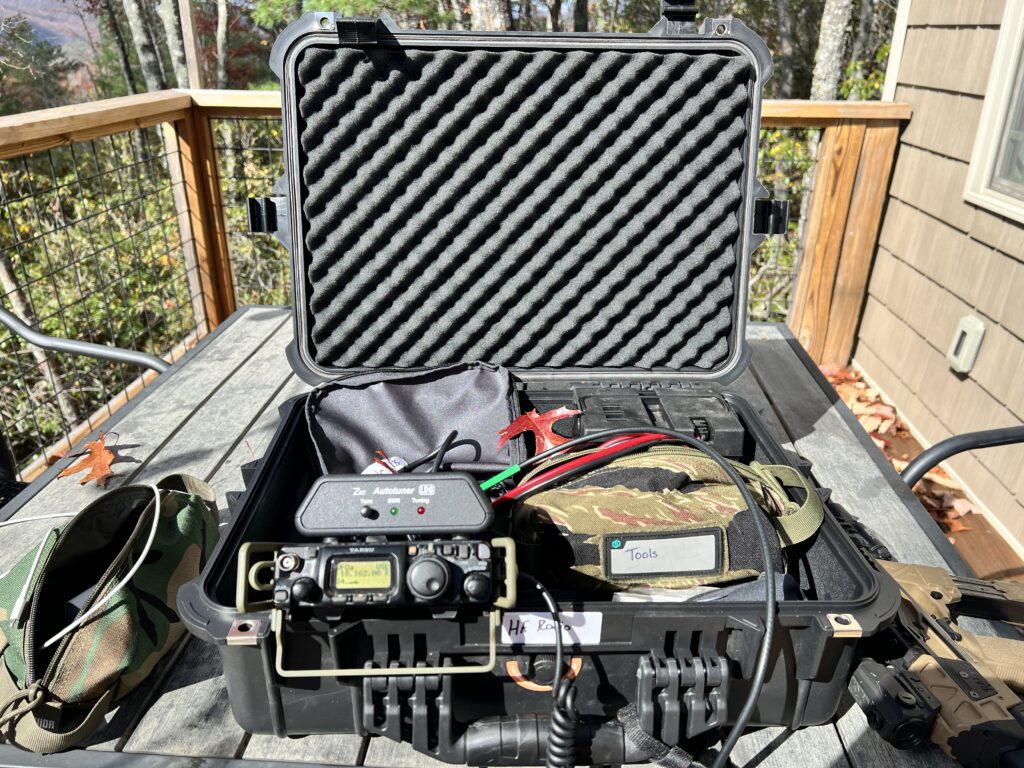
HF radios are the bedrock of long range communication. Learning this is great way to learn many new skills such as antenna making, circuitry, and antenna tuning. While I think that HF comms are great, for most people they aren’t exactly practical. Local areas are much more suited for UHF/VHF communications or Mesh networks.
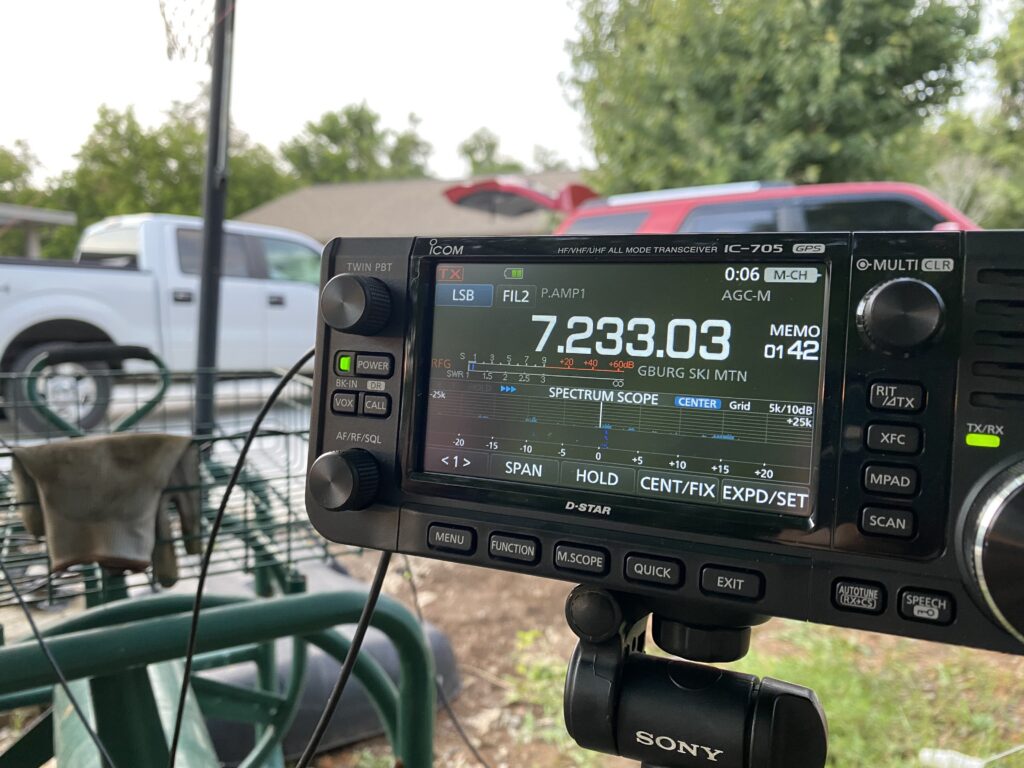
Radio’s that we have used range from the Xeigu G90, Yaesu 817 and 818, and the Icon IC-705. Understand that many of these radios do allow you to use the same frequency as handheld radios such as the Baofeng and other UHF/VHF radios as well as many other bands. However, they will not be as usable if your main purpose is to walk around and talk to your friends. Be aware that in the HF realm, good antennas and placement is more important than power.
Overall thoughts on radio preparedness.
The idea of communication doesn’t always mean a 2 way street, you do not have to talk. Listening allows you to gain valuable insight into your area without compromising your position. Radio signals are able to be located. Buying a radio should be purchased with purpose and thought. What is your purpose? Do I want to communicate with my family? How far away will I be? Is there a plan in place to use radios? When will my family or friends know when to turn on the radio? Which radio will I use?
All of these things should be answered. If you do not know, but want to have 1-2 radios to test with. Consider the Baofeng UV5R. Yes, you are supposed to have a license to communicate on it. The ONLY reason I would consider getting the license is that in the process of getting your license you will generally network with a pretty neat group of guys with a lot of experience and will learn so much.
Planning
Consider building a P.A.C.E. plan with your family. Example Plan Below:
Primary: Cellular Network
Procedure:
- Attempt a phone call.
- If no answer after 2 attempts (5 minutes apart):
- Send text message containing:
- Current location
- Destination
- Status
- Time
- Next planned check-in
- Send text message containing:
Alternate: VHF
Procedure:
- Primary Simplex
- Frequency 146.520 MHz FM
- National 2-meter simplex calling frequency
- After making contact:
- Move to: 146.580 MHz FM for extended conversation.
Radio Schedule
If contact is lost listen and call at:
- Top of every hour
- 15 minutes after
- 30 minutes after
- 45 minutes after
Remain monitoring for 10 minutes.
Contingency: Mesh Networks
Channel: Private Family Channel Name
Procedure:
- Transmit every
- 15 minutes while moving
- 60 minutes while stationary
- Include
- GPS
- Battery
- Direction of travel
- Destination
Emergency: HF Radio
- Day Frequency
- 7.242 MHz LSB
- Evening Frequency
- 3.920 MHz LSB
Procedure:
- HF Schedule
- Every 3 hours starting at 0900, give code word 3 times every 5 minutes for 15 minutes.
- 0900
- 1200
- 1500
- 1800
- 2100
- Every 3 hours starting at 0900, give code word 3 times every 5 minutes for 15 minutes.
- Remain on frequency for 15 minutes.
These are examples and can be as complex or as simple as you want. Consider the idea to include your children as they will love this and may know the plan better than your husband or wife. I wrote a sheet inside of my communication box with the directions for use for each radio type and the plan. My wife could follow this plan easily. Do not forget to test it with your family. Radios are fickle, and can be somewhat frustrating. Keep trying and be open to learn.
Below I have linked YouTube channels and places to get information regarding communication devices.
/mo
S2 Underground Videos and Documents
Ham Radio Crash Course
Mesh Network Resources
Ephesians 4:29 KJV

Let no corrupt communication proceed out of your mouth, but that which is good to the use of edifying, that it may minister grace unto the hearers.